


Meaningful jewellery: why we choose to wear a sign

You might buy a necklace simply because it is beautiful. But ask someone why they always wear the same ring. They will hardly ever talk about the design. They will talk about a date, a decision they made, a person. About something they do not want to lose sight of.
That is where a piece of jewellery begins to have meaning: when the person wearing it knows why they chose it. No label can decide that for them.
Here we try to understand what makes a piece of jewellery meaningful, why a necklace and a ring speak in different ways, and how to choose a piece with what you want to keep in mind.
What is meaningful jewellery
A piece of meaningful jewellery is a piece linked to something that matters to the person who wears it. It might be a choice, a passage in life, a person, a milestone reached. Its value does not depend on the material or the price. It depends on the relationship between the object and what it represents for that person.
This is why two identical pieces can carry different meanings. And the same piece, a few years on, can come to mean something new.
Symbol and sign: a useful difference
When people talk about symbolic jewellery, they usually think of shapes whose meaning is already written. The heart for love, infinity for what lasts, the four-leaf clover for luck. They are shared symbols. They work because everyone reads them in the same way, and for the same reason they say little about the person wearing them.
A sign works the other way round. It has a recognisable but open form, with no message printed on it. The meaning is brought by the person. Often only she understands it, and that is fine: a sign is, first of all, for the one who wears it.
The meaning of a necklace, a ring, a bracelet
Where on the body you wear a piece changes your relationship with it. It is worth thinking about before you choose, because this is where meaning becomes habit.
The ring: the piece you see most
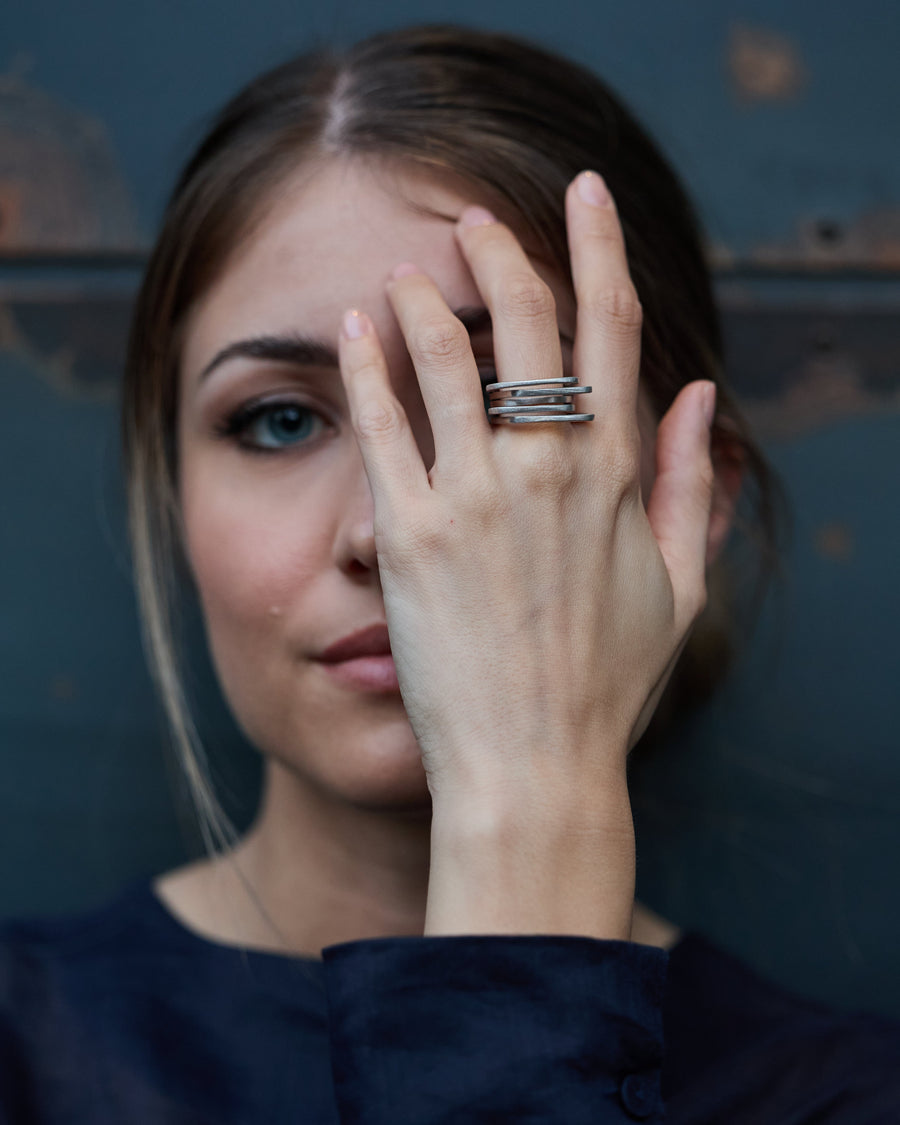
It sits on your hands and enters every gesture. Writing, driving, pouring a coffee. It is the piece you have before your eyes most often during the day, and that is also why it so often accompanies promises and decisions. If you want to keep a choice in mind, a ring puts it back in front of you dozens of times a day.
The necklace: close to the face
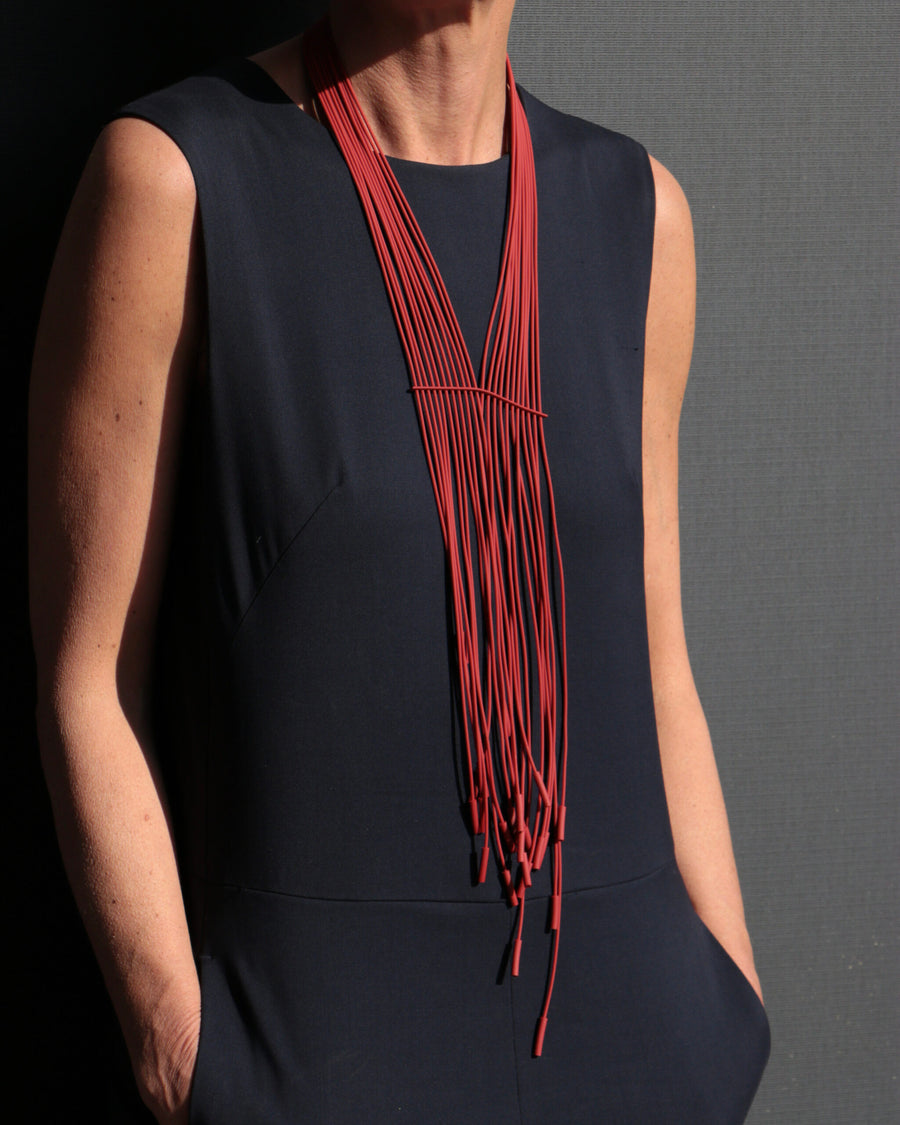
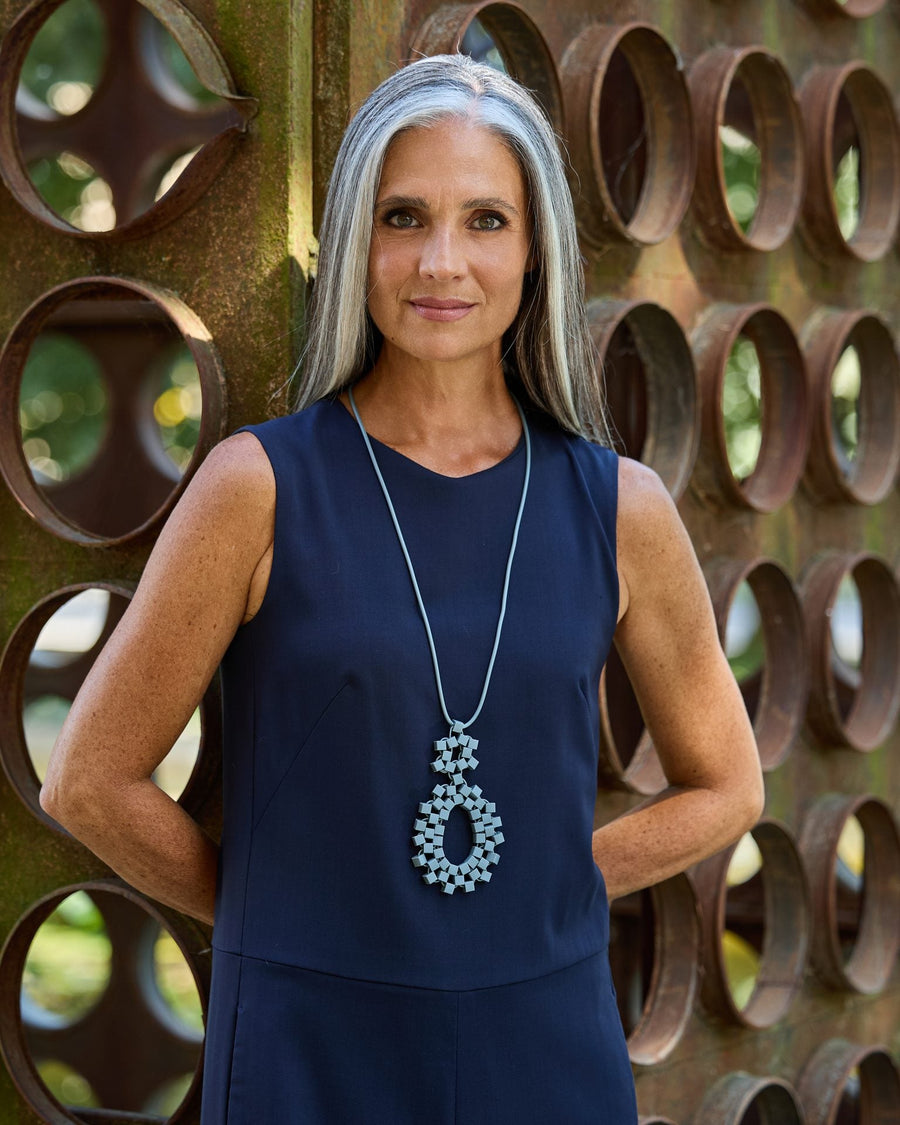
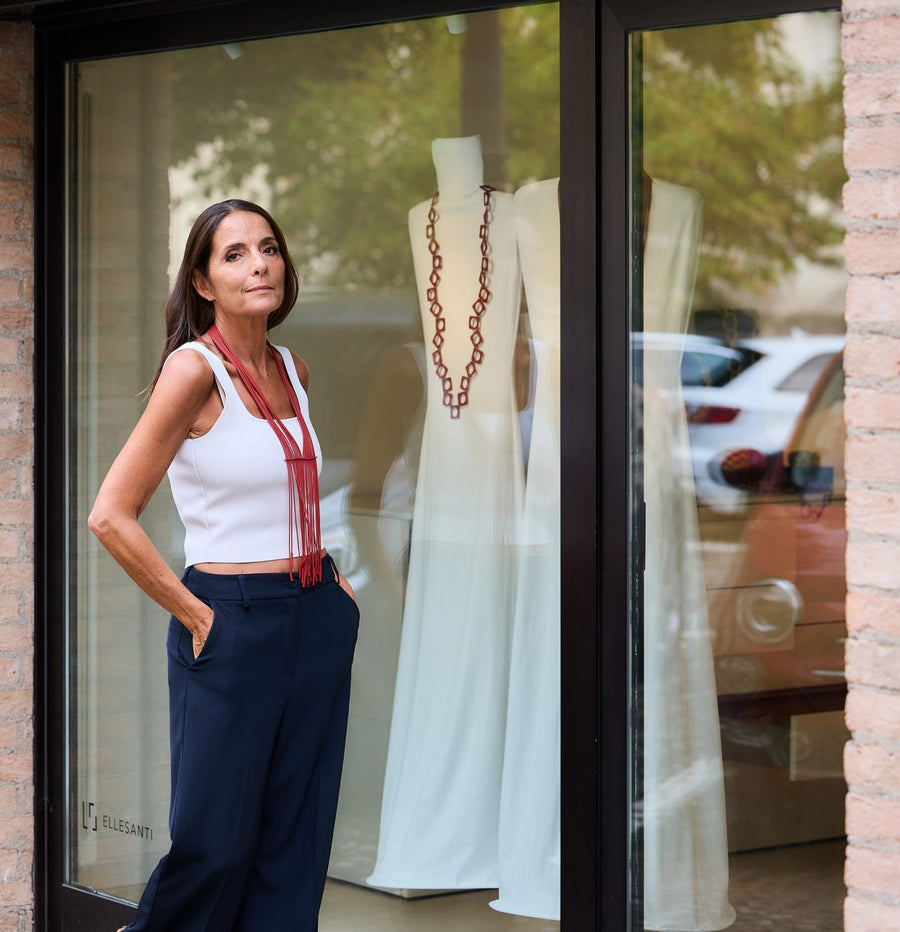
Others see a necklace before you do. It sits close to the face and the chest, and you touch it without noticing while you talk or think. It is the piece of presence: it says something about you to those who look at you, even when you are not thinking about it.
The bracelet: a reminder you can feel
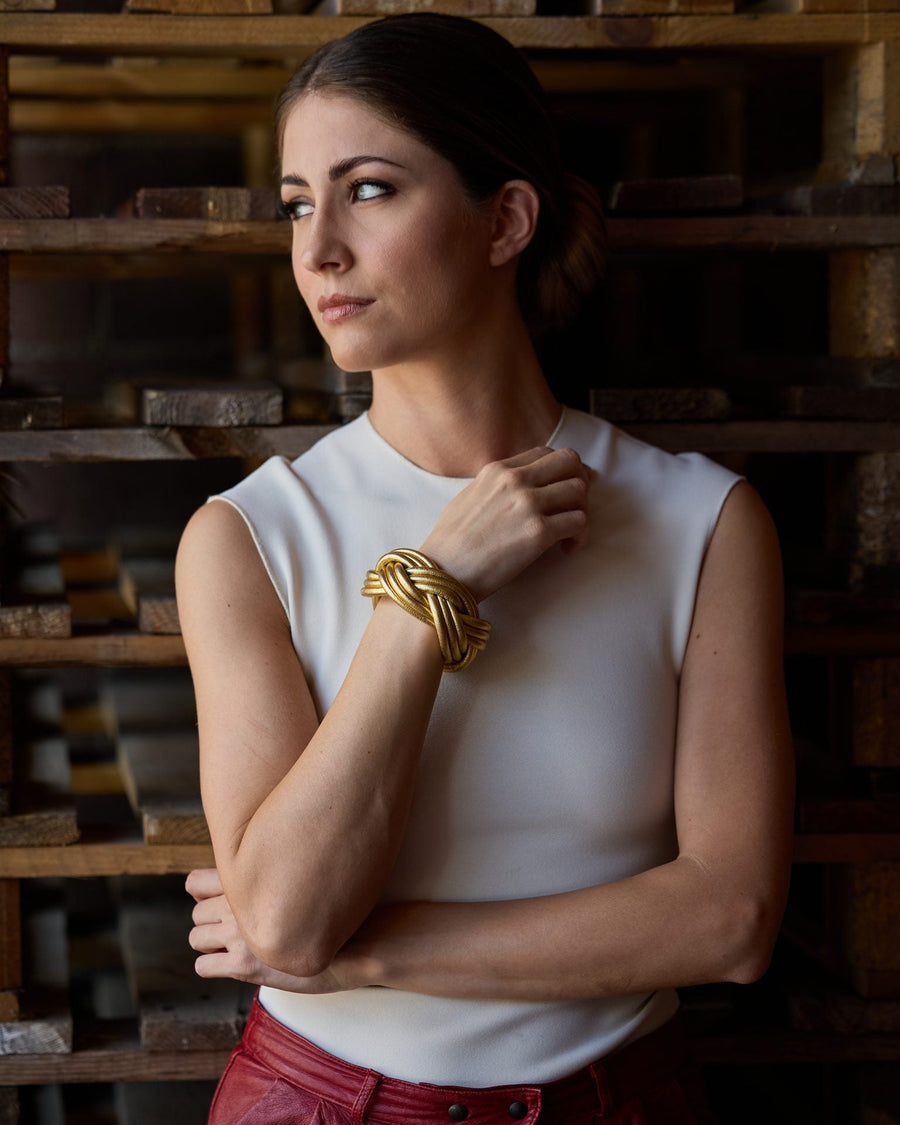
A bracelet moves with the wrist. It has weight, sometimes a sound. You feel it more than you look at it. Those who choose a bracelet to remember something often choose exactly this: a physical, discreet presence that makes itself felt in the movements of every day.
Earrings: a choice for yourself
You hardly ever see your earrings except in the mirror. They accompany the face and the way you present yourself. This is why they are often a piece chosen for oneself, in the morning, as part of who you want to be that day.
Jewellery that represents a moment
Some moments have no date on the calendar. Nobody celebrates them. The day you decide to start again, after a phase has come to a close. The day when, after years spent looking after others, you choose yourself. The day you understand what you want to keep and what you do not.
They are quiet passages, and yet they change a great deal. A piece chosen in that moment becomes a visible trace of something that has happened within. There is no need to explain it to anyone. It is enough that you know it every time you wear it.
How a form can carry meaning
If the meaning does not lie in a symbol already written, where does it lie? One possible answer is in the form itself, in what it does.
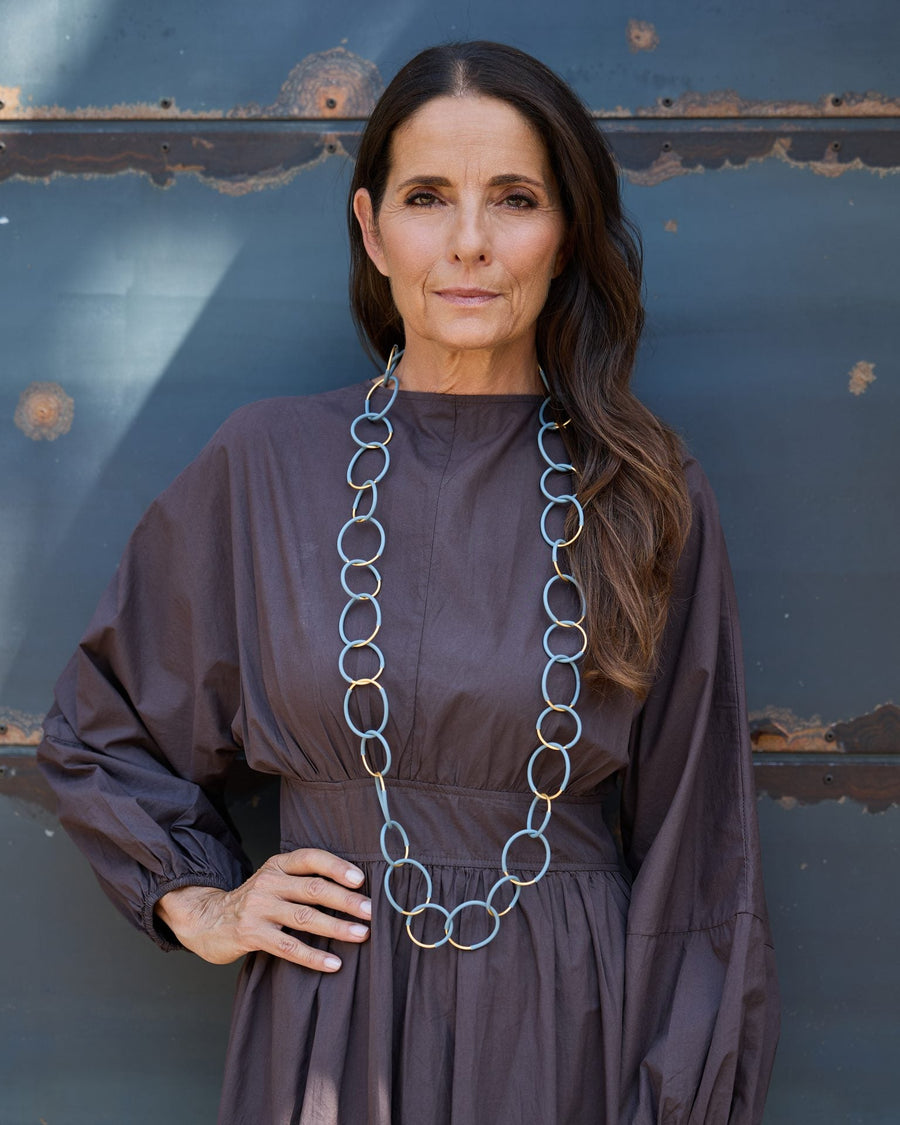
A line that continues without interruption. Two curves that set out together and then open. A geometry that marks out a space. Elements added one to another. They are behaviours of the material, but in each of them you can recognise something that also belongs to life: a continuity, an opening, a chosen boundary, a new beginning.
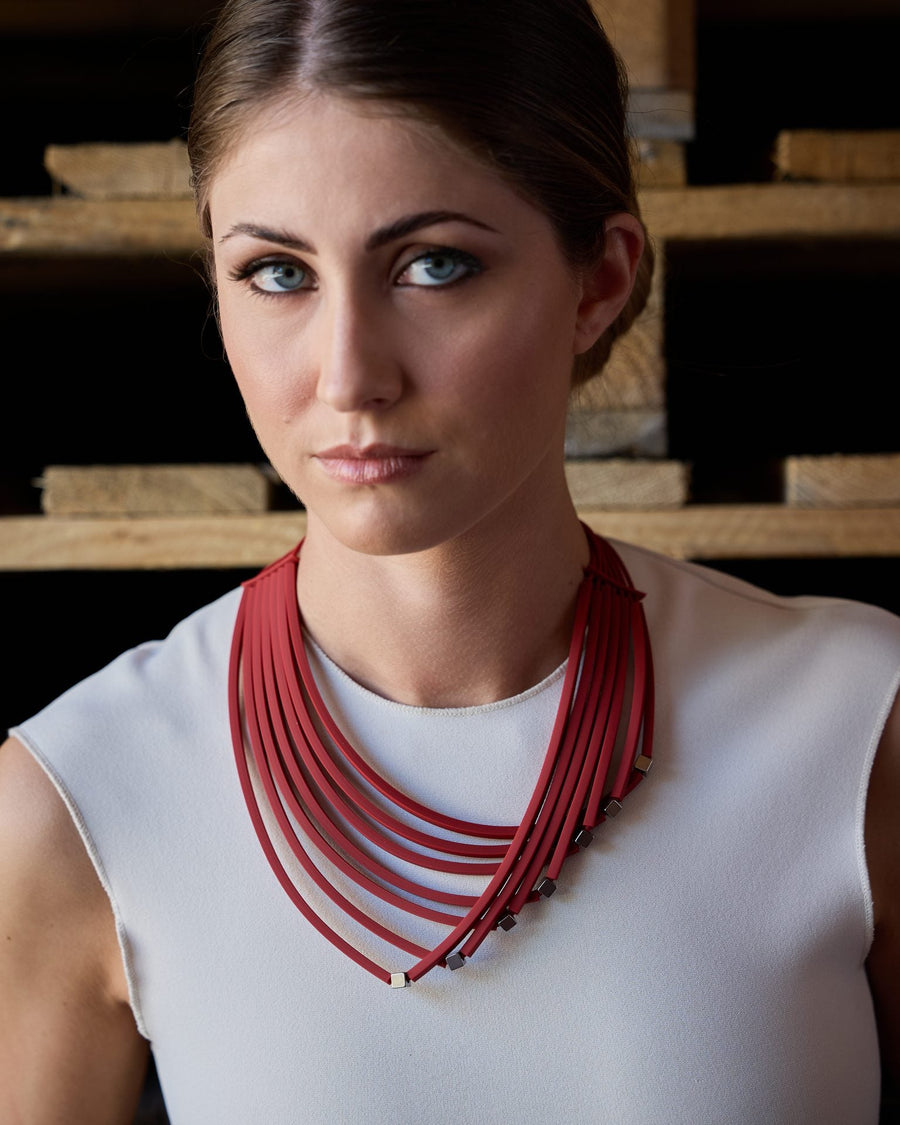
The Afrika+ necklace, for example, builds its volume by adding rhodium-plated brass cubes on rubber strands. Each element is added to those already there. In that form you can read a way of starting again: keeping what matters and adding the new.
It is a reading, not a rule. A knot does not always mean a bond, and a descending line does not always mean an achievement. The form gives direction. The meaning is completed by the person who chooses it.
How to choose a piece of jewellery with meaning
There is no single right method for everyone. There are, however, a few questions that help you not to choose with your eyes alone.
- Start from what you want to keep in mind. Try to say it in one sentence. If the sentence is there, the piece comes more easily.
- Think about where you want to see it. On your hands you will see it yourself, close to your face others will see it, on your wrist you will feel it.
- Look at what the form does. Does it continue, break off, open, stop? Ask yourself whether you recognise something of your own in that gesture.
- Make sure you like it even without an explanation. A piece of meaningful jewellery is first of all a piece of jewellery. If you would not wear it, meaning is not enough.
- Choose something to wear for a long time. Materials that last, that do not irritate the skin, comfortable to wear every day.
Signs for conscious choices
This is where Ellesanti jewellery begins. Laura Santi designs it by observing the passages of adult life: starting again, choosing yourself, saying yes to what matters, finding balance again, opening up to new freedoms, celebrating an achievement. Six moments, a form for each. The same logics return from one piece to another, gathered into six lines: those who learn to recognise them also learn to read them.
Essential in form, clear in meaning. Every piece must look good even on someone who does not know its story. Meaning adds something; it does not replace design. We have explained more closely how a piece of jewellery is born, from choice to form.
The meaning of a piece of jewellery is not written anywhere. You decide it, on the day you choose it, and you find it again every time you wear it.
If you want to start from what you are living through, we have gathered our jewellery by moment: find your moment.